What FSC certification covers and why it matters for plantation shutters
Forest Stewardship Council (FSC) certification is a third-party auditing scheme that evaluates forestry operations against ten principles covering biodiversity protection, the rights of indigenous and local communities, labour conditions across the supply chain, and the rate at which timber is harvested relative to the forest's capacity to regenerate. A forest operation that meets all ten principles receives FSC forest management certification; a manufacturer who processes certified timber and maintains documentation linking the finished product back to its certified source receives chain-of-custody certification. The result is that a customer purchasing an FSC-labelled product can trace the timber in their shutters back to the forest where it was felled and the standards under which that forest is managed.
For plantation shutters — a product category where tropical and imported timbers have historically been common — FSC certification addresses the most material environmental concern: that a hardwood product consumed in the UK might be contributing to deforestation or unsustainable harvest practices in its country of origin. The certification does not cover every environmental dimension of a shutter (shipping, packaging, and manufacturing energy are outside its scope), but it closes the most significant gap in the product's provenance. The full scope of Shutters Factory's sourcing commitments — including the certification standards applied to each timber range and the labour conditions required throughout the supply chain — is documented on our ethical sourcing page.
Understanding how the material choice — across timber, composite, and aluminium — maps onto different environmental priorities is covered in the full comparison of wood, composite, and aluminium shutter materials, which addresses the trade-offs across durability, aesthetics, and whole-life environmental credentials in a single guide.
Paulownia: the fast-growing hardwood behind the Strato and Graino ranges
Paulownia is the timber used in the Strato and Graino ranges, and it is the most environmentally compelling hardwood option available for plantation shutters. The paulownia tree grows at an exceptional rate: under typical plantation cultivation conditions it reaches a harvestable trunk diameter in six to eight years, compared to forty or more years for oak and sixty to eighty years for mahogany or sapele. This growth rate means a paulownia plantation can be harvested and replanted on a rotation that is rapid by forestry standards, with no pressure on slow-growing primary forest. The tree also coppices readily — the stump regenerates new shoots after cutting — eliminating the need for replanting in successive harvest cycles and reducing the mechanical and chemical inputs required per cycle.
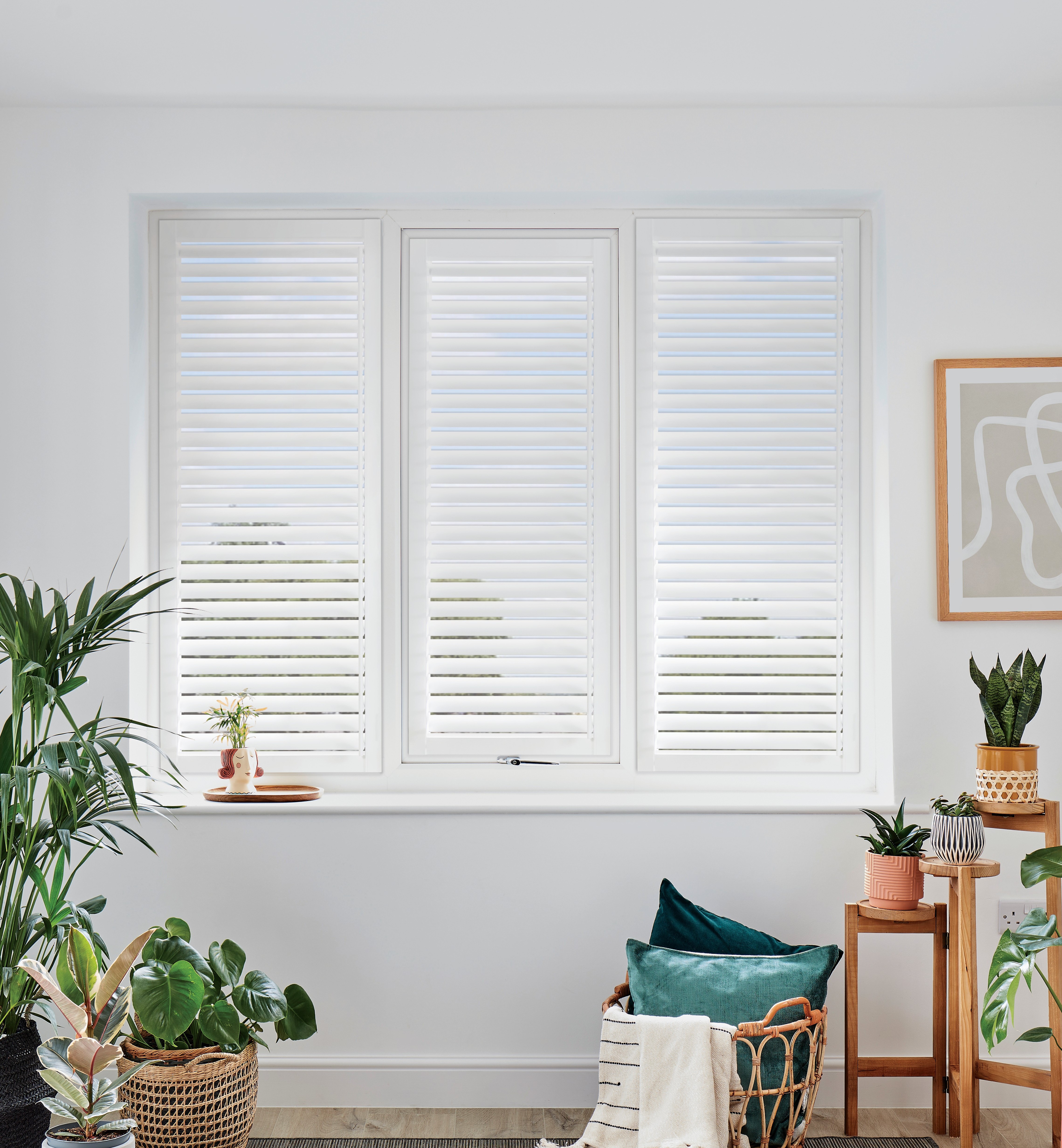
Strato paulownia shutters use this timber in its natural grain presentation: a fine, straight grain with a pale honey tone that accepts paint evenly and holds a crisp factory finish. Graino paulownia shutters apply the same underlying timber with a more pronounced brushed grain texture, producing a surface that reads as characterful against a painted interior without compromising the louvre's dimensional consistency. Both ranges benefit from paulownia's lightweight density — approximately 280–320 kg/m³ in finished dried form — which reduces structural load on frame fixings, simplifies installation in tall reveals, and makes handling easier on upper-floor rooms where a heavier panel would require two fitters. For a full technical assessment of paulownia's properties as a shutter timber — covering dimensional stability, response to seasonal humidity variation, and the finishing process — the guide to paulownia as a sustainable lightweight hardwood covers the material in detail.
Endura: the case for long-lived hardwood responsibly sourced
Endura hardwood shutters use a denser hardwood timber and are the range specified for rooms where additional mass, hardness, and a long anticipated service life are the primary brief. Ground-floor reception rooms in heavy-use family homes, period properties where the owner wants the shutter to match existing hardwood joinery in visual weight, and installations where the purchaser expects the shutters to remain in place across twenty to thirty years of continuous use are the typical Endura contexts.
The environmental calculation for a dense hardwood in this context is different from the paulownia case but still favours responsible sourcing. A hardwood shutter designed and installed to perform for twenty-five years displaces multiple cycles of lighter, shorter-lived window treatments whose accumulated production and disposal impact may exceed that of the single long-lived installation. FSC certification applied to the Endura timber supply chain provides the same assurance as it does for paulownia: the harvesting rate is within the forest's regenerative capacity, the biodiversity of the managed area is maintained, and the workers throughout the chain operate under audited labour standards. For a closer look at the material properties, typical applications, and the contexts where paulownia is the better choice over Endura, a detailed look at the Endura hardwood range covers the comparison in practical terms.
Chain of custody and in-house manufacturing
Chain of custody is the documentary link between the forest certification and the finished product in a customer's home. It works by requiring every processor in the supply chain — the sawmill, the kiln-drying facility, the component manufacturer, and the finishing operation — to hold their own chain-of-custody certificate and to pass documented timber volumes through each stage with accompanying paperwork. A break anywhere in the chain removes the FSC claim from the product at that point. The practical consequence is that chain-of-custody certification imposes administrative costs at every stage and creates a structural incentive for shorter, simpler supply chains with fewer intermediaries.
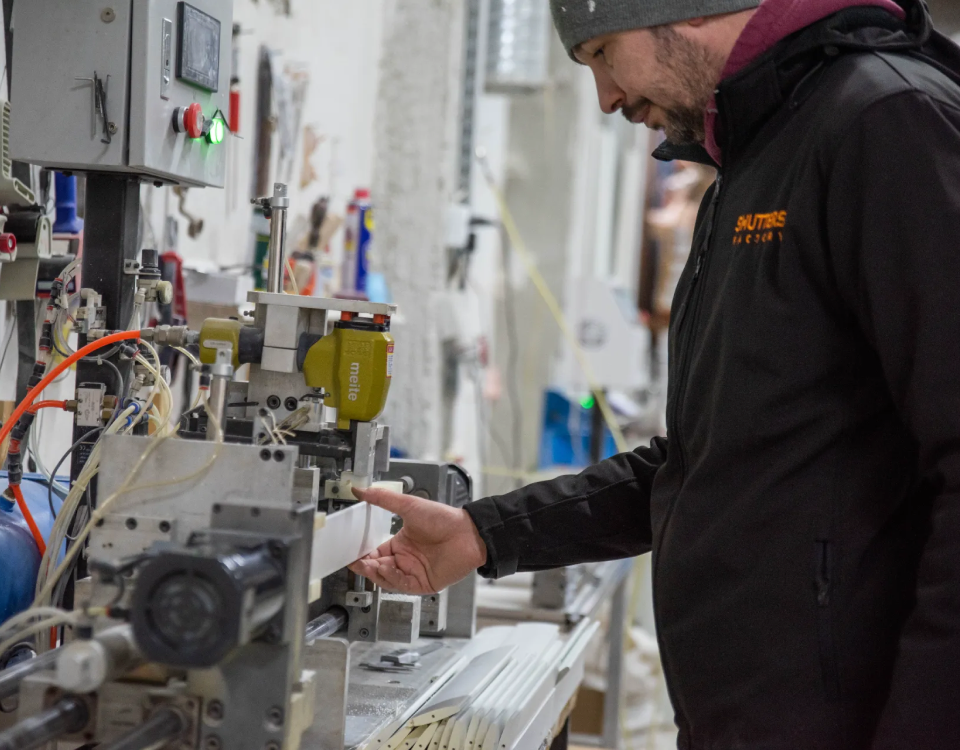
Shutters Factory's in-house manufacturing model compresses this chain significantly. Timber components arrive at the Shutters Factory UK production facility from the certified source and pass directly into the manufacturing process without an intermediate trade warehouse or sub-contracted processing step. The number of chain-of-custody links required to maintain the FSC claim on the finished product is lower than in a supply chain where components are produced offshore, exported, imported, and finished by separate entities. This structural simplicity means the FSC claim is easier to maintain and independently verify than it is in products assembled from components sourced across multiple countries by parties with no accountability for long-term performance.
In-house manufacturing does more for responsible sourcing than simply shortening the chain. It means that the team making decisions about timber specification — grade selection, acceptable moisture content at intake, the treatment applied to cut edges — is the same organisation responsible for the long-term performance of the product in the customer's home. For a full account of how Shutters Factory's ownership of the production process shapes both quality and environmental accountability, the story behind Shutters Factory's in-house manufacturing model covers the rationale and practical outcomes in detail.
Timber, composite, and aluminium: the environmental perspective
Responsibly sourced wood has the lowest embodied carbon of the three shutter material families when the FSC credentials and fast-growth characteristics of paulownia are taken into account. Growing a tree absorbs carbon as the timber forms, meaning the wood itself acts as a carbon store, and the manufacturing energy required to process paulownia into finished panels is modest relative to the energy required to smelt and extrude aluminium. Composite shutters use a cellular PVC profile: PVC is a petroleum-derived material with higher embodied carbon than paulownia timber but lower than primary aluminium, and the humidity resistance of composite means it is rarely replaced early due to material failure in the environments where it is specified. Aluminium requires the highest energy input in production but is fully recyclable at end of life without loss of material quality.
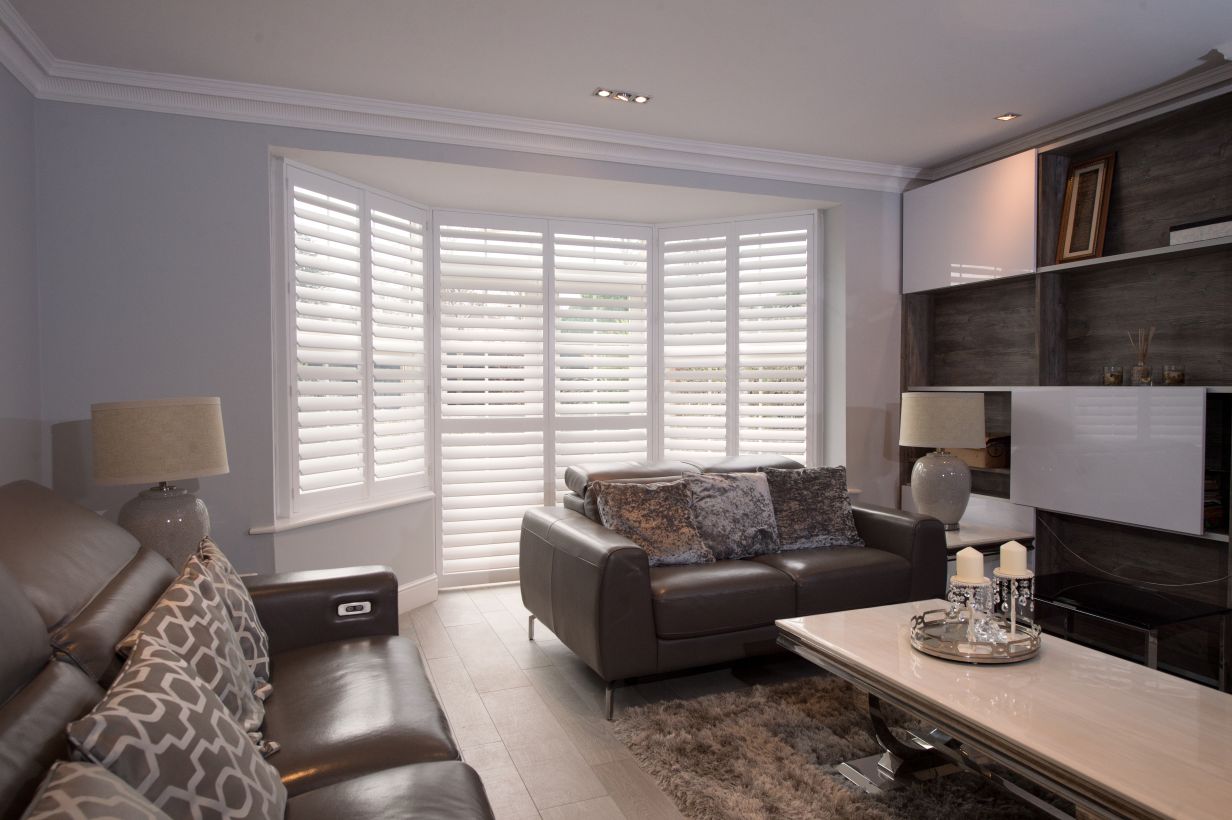
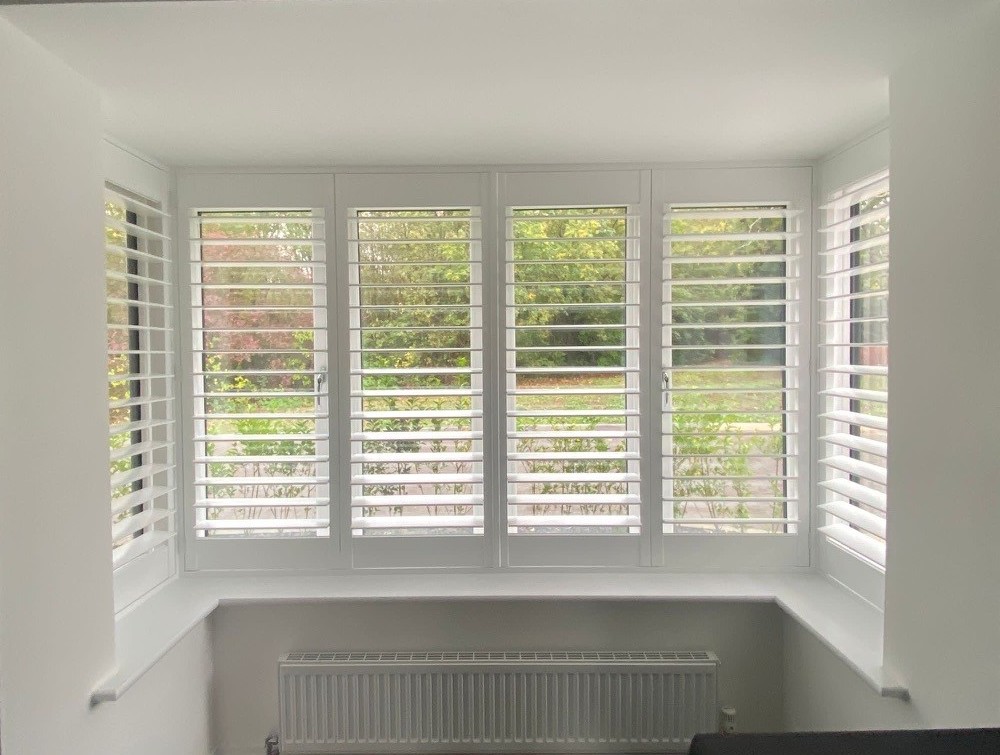
The most environmentally responsible choice is frequently the one that performs longest in its installed environment without requiring replacement, regardless of material. A paulownia shutter installed correctly in a dry living room and properly maintained over twenty years has a very low whole-life environmental impact. The same material specified in a kitchen exposed to cooking steam would degrade in seven to ten years — making composite shutters built for humid environments the more responsible choice for that room, since their longer service life in that context reduces the total production impact over the building's life. For a systematic comparison of all three material families across different room types, humidity levels, and service life expectations, the full shutter materials comparison covers the trade-offs in one place. To see how each material looks in real completed installations, browse real shutter installations across all three material families for a visual reference across a range of property styles. The full made-to-measure range with specifications and indicative pricing is available at the Shutters Factory product pages. To receive a material recommendation tailored to your home's specific rooms and conditions, book a free home survey — the surveyor will assess every window and advise on which range balances environmental responsibility, durability, and aesthetics most effectively for each aperture.